Smart cities, sustainable infrastructure, digital built environment

Operating Model

How SCSDA is organised: research groups join with their own teams under a shared framework, projects sign through the academy, and a small in-house team runs delivery, finance and commercialisation.

Operating Model

A framework research groups choose to join.

SCSDA was not built by hiring a large staff. It was built as an arrangement that research groups had a reason to join, and the arrangement did the work. This page sets out how the academy is organised, because the model itself is part of what the academy offers to prospective partners.

How It Works

Five elements of the model.

Each element is designed so that participation is worthwhile for the joining group on its own terms, rather than depending on reporting lines or institutional obligation.

1. Groups join with their own teams

  • Academics join together with the researchers they already lead.
  • They plug into a shared framework: research directions, task objectives, funding and indicators, and access to equipment, instruments and space.
  • No one transfers employment to the academy.

2. Projects sign through the academy

  • External projects won by participating groups are contracted in the academy's name.
  • This gives the platform a coherent delivery record rather than a scatter of individual engagements.

3. A small in-house team runs operations

  • The academy directly employs a core team covering finance, technical delivery, management, market development and commercialisation.
  • Research groups are freed from administration; the platform keeps delivery discipline in one place.

4. Mature results can spin out

  • Where results reach commercial maturity, staff can establish a company around them.
  • The academy takes an equity holding and continues to support the venture rather than stepping away from it.

5. Centres with European partners run the same model

  • Joint centres established with European partner institutions follow the same framework.
  • Each rests on its own dated, signed agreement rather than an informal contact — four European universities across three countries, with instruments signed between December 2019 and December 2021.
  • Cooperation funding flows in both directions: the academy pays the partner side for its participation.
  • The traffic is two-way in substance, not only in wording: joint publications, four signed tripartite agreements for joint master's and doctoral supervision, and a shared submission to a European national research council.

The Model in Physical Form

Centres formed under the framework.

The clearest evidence that the framework works is physical: research centres with their own premises, equipment and direction, formed by groups that chose to join.

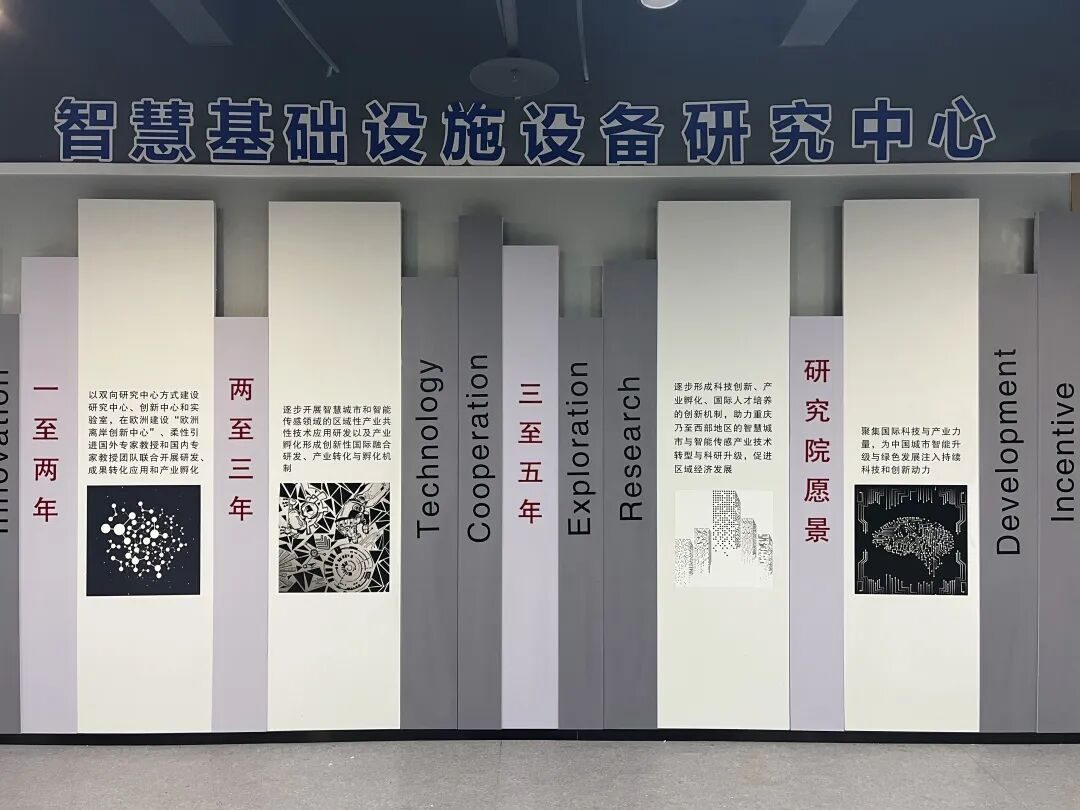
Development wall of the Academy's research centres showing the staged centre-building programme
Platform structure

A staged centre-building programme

The Academy's centre wall records the development path: which centres were formed, in which phase, and around which research questions. Structure, not slogans.

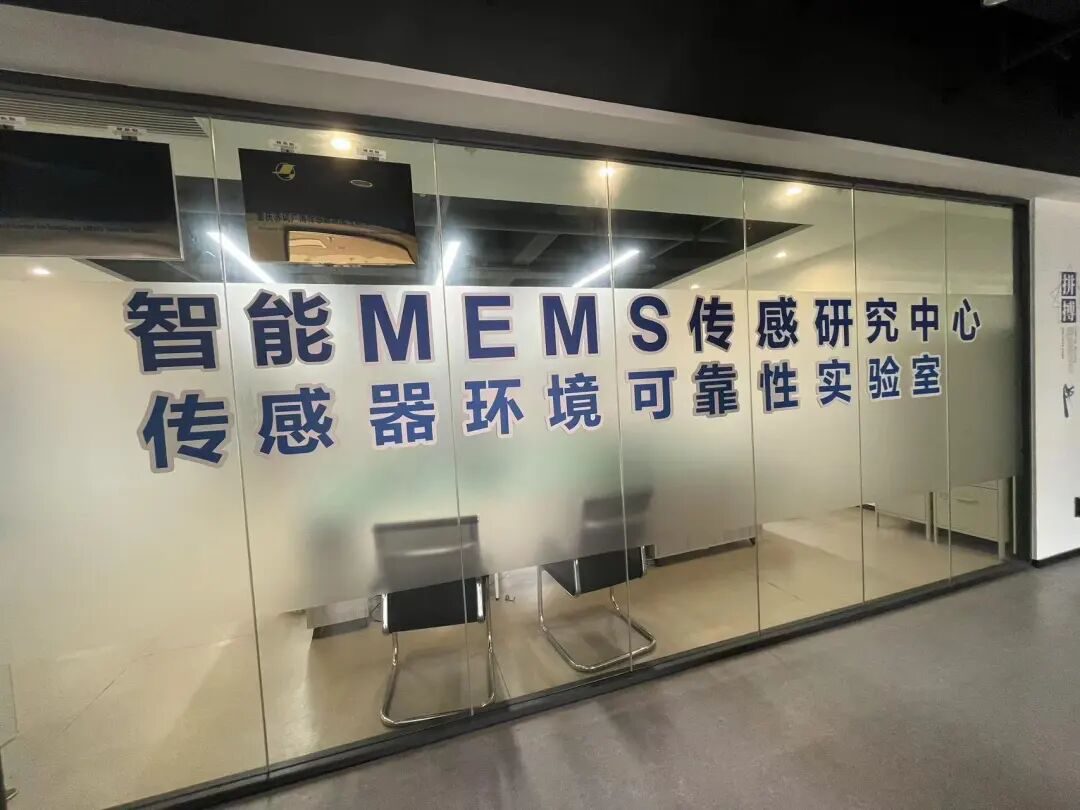
Entrance of the Smart MEMS Sensing Research Centre and the sensor environmental reliability laboratory
Research centres

Smart MEMS sensing and reliability testing

The Smart MEMS Sensing Research Centre and the sensor environmental reliability laboratory are two of the twelve joint bilateral centres formed during the construction period.

Advisory Structure

An expert committee that reviews the research, not the brochure.

Alongside the delivery framework sits an expert advisory committee of more than thirty professors and senior practitioners, co-chaired by an international academic and a Chinese industry expert, with vice-chairs drawn from both sides.

Five expert groups

  • Digital transformation of the construction sector
  • Applied artificial intelligence for urban engineering records and management
  • Intelligent sensing: MEMS, optical and AIoT sensors
  • Intelligent construction and operations for buildings and infrastructure
  • Green and low-carbon development: materials, energy and environment

What the committee does

  • Reviews research directions and topic selection before resources are committed.
  • Advises on resource allocation, research quality and industrial fit.
  • Connects the platform to sector needs and external collaboration.
  • Provides advisory and review services to external organisations.

Why This Matters

The arrangement is the capability.

A research platform that depends on direct authority can only grow as fast as it can hire. A platform built as a framework grows whenever a capable group finds it worth joining. During its construction period the academy developed twelve joint bilateral research centres and laboratories, each formed under a dated signed agreement with its co-founding partner, and cumulatively recruited forty-five researchers at master's level and above, alongside forty-six postgraduate and doctoral participants and a visiting professorship network of seventeen senior experts engaged under institutional agreements.

These figures come from the government-accepted construction-period report covering 2019 to 2023. They are presented here to show how the model performed, not as a claim about current staffing.

Working With Us

Who this model suits.

The framework works best for research groups that already have their own people and direction, and that want delivery infrastructure around their work: contracting, finance, industry access and a route to commercialisation. It also suits European partner institutions that want a working relationship in China with defined funding flows and a dated signed instrument, rather than a memorandum of understanding.

Individual cooperation agreements are held with academics at a number of universities. The academy does not present these as institution-level partnerships, and does not list partner names publicly, since an agreement with a researcher is not an endorsement by their employer.